
The Canadian Tutor's Complete Guide to Professional Billing
Private tutoring in Canada is a growing industry, with parents and students investing more in personalized education than ever before. Yet many tutors still rely on informal payment methods like cash or e-Transfer without proper invoices. Professionalizing your billing not only improves your credibility with families but also keeps you aligned with CRA requirements and helps you claim legitimate business deductions at tax time.
Hourly Rates vs. Package Deals: Finding the Right Pricing
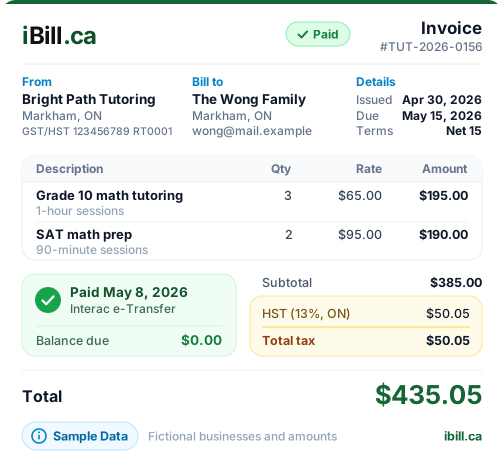
Canadian tutors charge anywhere from $30 to $120 per hour depending on subject, grade level, and credentials. University-level math and science tutors command the highest rates, while elementary homework help sits at the lower end. The choice between hourly billing and package pricing affects both your cash flow and your client retention. Package deals, such as 10 sessions for the price of 9, encourage upfront commitment and reduce the administrative burden of invoicing after every session. When offering packages, your invoice should clearly state the per-session value so parents can see the savings. This is similar to how personal trainers structure their session bundles: transparent pricing with a clear incentive for bulk purchases.
Online vs. In-Person and Group Tutoring Considerations
The shift to online tutoring has permanently changed how Canadian tutors bill. Many tutors now offer a lower rate for virtual sessions (typically 10 to 15 percent less) since there is no travel time or space rental involved. Your invoice should specify the delivery format for each session so there is no confusion about the rate applied. Group tutoring is another billing model gaining popularity, especially for test preparation and exam review. When billing group sessions, you can either invoice each family individually at a reduced per-student rate, or invoice one family and let them coordinate cost-sharing. The per-student approach is cleaner from an accounting perspective. Use time tracking to log actual session durations accurately, especially when switching between individual and group formats throughout the week.
Seasonal Demand and Materials Pass-Through
Tutoring demand in Canada peaks sharply during October through November (midterm season), January through March (exam preparation), and June (final exams and summer school prep). Smart tutors adjust their availability and sometimes their rates during these periods. If you charge higher rates during peak season, document this in your engagement terms and reflect it clearly on your invoices. Materials pass-through is common in tutoring, from workbooks and practice tests to specialized supplies for music or art instruction. Add these as separate line items with the actual cost. Parents appreciate knowing exactly what they are paying for instruction versus materials. If a family consistently struggles with timely payment, having clear late payment policies in place, communicated upfront, protects your income without damaging the relationship. Like massage therapists and other appointment-based professionals, tutors should also consider cancellation fee policies to protect against last-minute no-shows during busy periods.