
Cash Flow Statement Software — Track Every Dollar In and Out
Record a payment and see your cash position update instantly. Operating, investing, and financing activities — all auto-generated from your general ledger.
Cash Flow Statement = Operating + Investing + Financing
Example: $65,000 received from clients − $38,500 in expenses − $15,000 equipment purchase + $10,000 owner investment = $21,500 net cash increase. iBill generates this automatically from your GL entries — no signup required to explore.
The Three Sections of a Cash Flow Statement
A cash flow statement tracks how cash moves through your business, organized into three categories
Operating Activities
Cash from your core business operations. This includes payments received from clients, expenses paid for supplies and services, GST/HST remittances, and payroll. Operating cash flow is the most important indicator of whether your business generates enough cash to sustain itself day-to-day.
Investing Activities
Cash spent on or received from long-term assets. This includes purchasing equipment (GL 1600), vehicles, computers, and other capital assets tracked through CCA depreciation. When you sell an asset, the proceeds appear here too. Investing activities show how you are building or liquidating your business infrastructure.
Financing Activities
Cash from owners and lenders. This includes owner capital contributions (GL 3100), owner draws, loan proceeds, and loan repayments. Financing activities show how your business is funded beyond its own operations — whether through the owner's pocket or external borrowing.
Cash Flow Statement Features
Everything you need to understand where your cash comes from and where it goes
Auto-Generated from GL
Your cash flow statement is built directly from general ledger journal entries. Every payment received, expense paid, and asset purchase flows into the correct cash flow category automatically — no manual data entry or spreadsheets needed.
Cash-Basis Reporting
iBill's dashboard counts revenue when an invoice is issued; the Profit and Loss report shows revenue when payment is received. Sales tax timing follows the Excise Tax Act s.168 rule (earlier of invoice date or payment date). Your tax preparer determines which basis applies to your filing.
Real-Time Updates
Every time you record a client payment, pay an expense, or purchase equipment, your cash flow statement updates instantly. No waiting for month-end. You always know your current cash position and how it has changed.
Period Comparison
Compare cash flow across periods — this month vs. last month, this quarter vs. last quarter, or any custom date range. Spot trends in operating cash flow, identify seasonal patterns, and track whether your business is becoming more or less cash-positive over time.
Export to PDF & Excel
Export your cash flow statement to a professional PDF for your accountant, banker, or loan application — or to Excel for custom analysis. Both formats show the full operating, investing, and financing breakdown with period totals.
CRA Audit Trail
Every line item on your cash flow statement links back to its source journal entry with entry number, date, and description. This gives you full traceability for CRA audits under ITA s.230 — every dollar in and out is documented and verifiable.
See Where Your Cash Goes
Every payment, expense, and asset purchase flows into your cash flow statement automatically. No spreadsheets, no guesswork.
Get Started NowCash Flow Statement Example
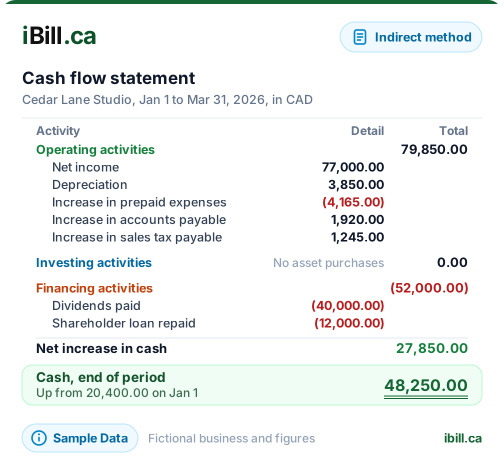
A sample cash flow statement showing how operating, investing, and financing activities are presented
Sample Business — Cash Flow Statement
For the period January 1 – March 7, 2026
Ending cash ties to the balance sheet: The $42,500 ending cash balance matches GL 1200 (Cash and Bank) on the balance sheet. iBill ensures this reconciliation automatically — if a journal entry affects cash, it appears on both statements.
Why Cash Flow Matters for Your Business
Profitable businesses can still run out of cash. A cash flow statement shows you the full picture.
Cash vs. Profit
Your income statement might show a profit, but if clients pay late and expenses are due now, you could still be short on cash. The cash flow statement reveals timing differences between earning revenue and actually receiving payment — critical for managing payroll, rent, and supplier bills.
Loan & Credit Applications
Banks and lenders want to see your cash flow statement alongside your balance sheet and income statement. Positive operating cash flow demonstrates that your business generates enough cash to service debt — often more important to lenders than reported profit.
CRA Compliance
The CRA requires businesses to maintain accurate financial records under ITA s.230. A cash flow statement helps verify that reported income matches actual cash received, that expenses are documented, and that asset transactions are properly recorded. iBill links every cash flow entry to its source journal entry.
Cash Flow Statement FAQs
Ready to see exactly where your cash goes?
Create AccountTrack Your Cash Flow Automatically
Trusted by Canadian businesses using iBill's accounting tools.
Create AccountUnlimited Invoices • CRA Audit-Ready