
Why Landscaping Professionals in Canada Need Dedicated Invoice Software
Landscaping in Canada is defined by its seasonality in a way few other trades experience. In most of the country, the core landscaping season runs from April through October, with snow removal extending revenue through winter for those who offer it. This compressed earning window means that during peak season, a landscaping crew might complete 8 to 12 jobs per week -- lawn maintenance, garden installations, interlock patios, retaining walls, and sod laying -- each requiring a separate invoice with very different line items and pricing structures. A weekly lawn cut billed at $45 looks nothing like a $7,500 backyard patio installation with a 50% deposit requirement. Without proper invoicing, landscapers spend their short evenings after long outdoor days buried in paperwork instead of quoting the next job.
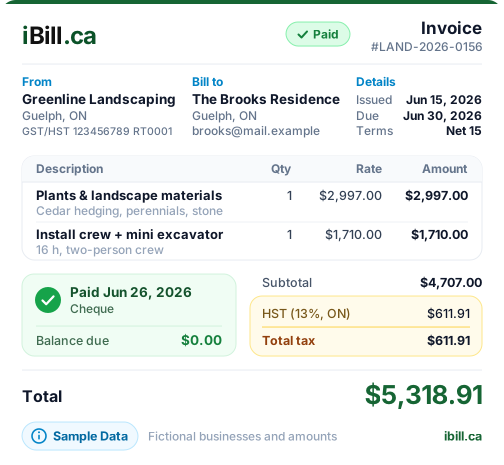
Material costs represent a major component of landscaping invoices that must be tracked carefully. A single hardscaping project might involve 15 pallets of interlock ($600 to $900 per pallet), 10 yards of gravel base ($45 per yard delivered), polymeric sand, edging, and landscape fabric. Soft landscaping jobs require sod (typically $0.50 to $0.80 per square foot installed), topsoil, mulch, and nursery plants ranging from $20 perennials to $300 specimen trees. Your invoice needs to clearly separate material costs from labour so clients can see the value breakdown, and so you can track your actual material margins. This materials-versus-labour billing challenge is shared with cleaning service operators who must decide whether to bundle or itemize supply costs, and painting contractors who face similar markup decisions on paint and materials.
Seasonal Revenue Management and Snow Removal Billing
Snow removal billing adds a second revenue stream but also a second layer of invoicing complexity. Residential driveways are typically billed per visit ($35 to $75 depending on the city and driveway size) or on a seasonal flat rate ($400 to $800 for November through March). Commercial lots are priced per push, per hour of equipment time, or on monthly retainers, and often include salt or sand application billed separately by the tonne. A single snowfall event might generate 20 to 40 invoices in a single day, each needing to go out promptly because snow removal clients expect quick billing. Proper expense tracking for fuel, salt, and equipment maintenance during winter months is essential for understanding whether your snow removal division is actually profitable or just keeping the crew busy.
The seasonal revenue gap between November and March (for those without snow contracts) creates serious cash flow challenges. Invoices from September and October installations may not be paid until November or December, while equipment loan payments, insurance, and vehicle costs continue year-round. Understanding how to handle late-paying clients is particularly important for landscapers because a $5,000 unpaid fall project invoice can mean the difference between a comfortable winter and a financially stressful one. Setting clear payment terms on every invoice -- and following up consistently -- is not just good business practice for landscapers, it is a survival skill in a seasonal industry.