iBill.ca
Get Started
Contractor Templates

Contractor Invoice Template Canada

Professional invoice templates designed for Canadian contractors. Automatic GST/HST calculation, hourly or project billing, materials tracking - all CRA-ready.

Start Invoicing Like a Pro

Templates for Every Type of Contractor

Whether you're in construction, IT, or any trade - we have the right template for you

Construction

General contractors, builders, renovations

Electrical

Electricians, wiring, installations

Plumbing

Plumbers, HVAC, gas fitters

IT & Tech

Software developers, consultants

Creative

Designers, photographers, writers

Home Services

Landscaping, cleaning, painting

What Your Contractor Invoice Must Include

CRA-ready invoices require specific information. Here's what you need.

Your Business Info

  • Business name (or your name)
  • Address
  • Phone number
  • Email address
  • GST/HST number (if registered)

Client Details

  • Client name or company
  • Client address
  • Contact information
  • Project reference (if applicable)

Invoice Details

  • Unique invoice number
  • Invoice date
  • Due date
  • Payment terms
  • Project/work description

Charges & Taxes

  • Labour hours and rates
  • Materials costs (itemized)
  • Subtotal before tax
  • GST/HST amount (separate line)
  • Total amount due

Learn more about CRA invoice requirements

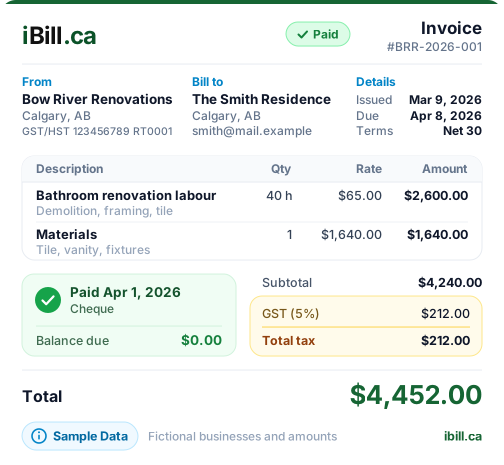
Sample Contractor Invoice

123 Builder Street
Calgary, AB T2P 1A1
GST #: 123456789 RT0001

INVOICE

#INV-2026-001
Date: Dec 18, 2026

Bill To:

John Smith
456 Client Avenue
Calgary, AB T2P 2B2

Project:

Kitchen Renovation
Due: Jan 17, 2026
Terms: Net 30

Description Qty/Hours Rate Amount
Labour - Kitchen demolition 8 hrs $65/hr $520.00
Labour - Cabinet installation 16 hrs $65/hr $1,040.00
Materials - Cabinets (supplied) 1 $2,500 $2,500.00
Materials - Hardware & supplies 1 $180 $180.00

Subtotal: $4,240.00

GST (5%): $212.00

Total Due: $4,452.00 CAD

Why Contractors Choose iBill.ca

Hourly + Project Billing

Bill by the hour, by project, or mix both. Track time and materials on the same invoice.

Automatic Tax Calculation

GST, HST, PST, QST - all calculated automatically based on your province. Try our calculator.

Materials Markup

Add materials costs with optional markup. Keep labour and materials clearly separated.

Professional PDF Export

Download polished PDF invoices to email clients or print for job sites.

Client Database

Save client details for repeat jobs. One click to create new invoices for regulars.

Easy to Use

No subscriptions, No surprises. Unlimited invoices for Canadian contractors.

Contractors: Create Professional Invoices in 60 Seconds

iBill creates CRA-ready invoices for contracting work with automatic tax calculations and professional PDF export.

Create Invoice
Trusted by Canadian Businesses — 1,200+ signups

Construction & Contractor Invoicing: Holdbacks, Change Orders, and Progressive Billing

Contractor invoicing in Canada involves unique complexities that go well beyond listing hours and materials. Construction holdback legislation, change orders mid-project, and milestone-based billing all require careful documentation on your invoices. Understanding these requirements protects your right to payment and keeps you ready with provincial regulations.

Construction Holdback Legislation by Province

Every Canadian province requires a statutory holdback on construction projects, where the payer retains a percentage of each progress payment until the project is substantially complete. In Ontario, the Construction Act mandates a 10% holdback for 60 days after substantial completion. British Columbia requires 10% for 55 days under the Builders Lien Act. Alberta holds back 10% for 45 days under the Prompt Payment and Construction Lien Act. Saskatchewan and Manitoba follow similar 10% structures with varying release timelines. Your invoices should always show the holdback amount as a separate line item so both you and the client can track what is retained and what has been released.

Change Order Invoicing

Scope changes are inevitable on construction projects. When billing for a change order, always reference the original quote or contract number and the specific change order document number. Include a clear description of the additional work, the agreed-upon price or rate, and any impact on the project timeline. This creates an auditable trail from the original scope through each modification. For example, your invoice line might read: "Change Order #CO-003 (ref. Quote Q-2026-041): Additional electrical rough-in for basement suite — $2,400.00." This level of detail prevents disputes and supports your position if payment is contested.

Mobilization and Demobilization Charges

Transporting heavy equipment to and from a job site is a legitimate billable expense. Mobilization charges cover delivery, setup, and the cost of making equipment operational on-site. Demobilization covers the reverse. These charges should be itemized separately on your invoice with a description of the equipment involved. For large projects, mobilization fees typically range from $500 to $5,000 or more depending on the equipment. Including these as explicit line items prevents clients from questioning why the project total exceeds the quoted labour and materials.

WSIB/WCB Clearance Certificates

Many general contractors and property owners require proof of workplace safety insurance before releasing payment. In Ontario, this is a WSIB clearance certificate; other provinces use their respective Workers' Compensation Board (WCB) equivalents. Including your clearance certificate number on your invoice, or attaching a current certificate, accelerates payment processing. If your certificate lapses, clients may legally withhold payment until you provide a valid one. Keep certificates current and reference them directly on every invoice for commercial work.

Progressive Billing for Large Projects

For projects exceeding $50,000 — common in renovations, commercial fit-outs, and new construction — progressive or milestone billing is standard practice. Break the project into defined milestones (foundation, framing, mechanical, finishing) and invoice upon completion of each phase. Each progress invoice should state the milestone completed, the percentage of total project value it represents, the cumulative amount billed to date, the holdback retained, and the net amount due. This approach improves your cash flow, reduces the client's risk, and creates a clear record of project progress tied to payments.

For more on collecting overdue payments on construction projects, see our guide on handling late payments. Ensure every contractor invoice meets CRA compliance requirements, and use expense tracking to document project costs alongside your invoicing. For material purchases and subcontractor expenses, receipt tracking software keeps your records organized for CRA audit purposes.

Contractor Invoice FAQs

What should a contractor invoice include?
A contractor invoice should include: your business name/contact info, client details, unique invoice number, date, detailed work description, hours worked or project milestones, rates, materials costs, subtotal, GST/HST breakdown, total, payment terms, and your GST/HST registration number (if applicable).
Do contractors need to charge GST/HST?
You must register for and charge GST/HST if your annual revenue exceeds $30,000 over four consecutive calendar quarters. Below this threshold, registration is voluntary but can be beneficial for claiming input tax credits on business expenses.
How do I invoice for materials as a contractor?
List materials separately from labour on your invoice. Include the item description, quantity, unit cost, and total. You can add markup if agreed with the client. GST/HST applies to the total including materials (unless the client is providing materials directly).
Should I invoice before or after completing work?
This depends on your agreement with the client. Options include: upfront deposit (common for materials), progress billing (for larger projects), or upon completion (for smaller jobs). Always clarify payment terms before starting work.
What's the difference between a contractor and subcontractor invoice?
A contractor invoices the end client directly. A subcontractor invoices the general contractor (not the end client). Both types of invoices have the same CRA requirements, but subcontractors should reference the project and general contractor's details.

Ready to streamline your contracting business invoicing?

Create Invoice

Start Creating Professional Contractor Invoices

Enter your invoice amount and province — we'll pre-fill your first invoice automatically.

Create Account

• Unlimited Invoices • CRA-Ready