
Invoicing and Receipt Essentials for Canadian Massage Therapists
As a Registered Massage Therapist in Canada, your receipts serve double duty: they are both a billing document for your practice and a critical piece of paperwork your clients need for insurance reimbursement. Understanding the difference between an invoice and a receipt is particularly important in massage therapy, since insurance companies require proof of payment, not just a request for payment.
Session-Based Billing and Insurance Receipt Requirements
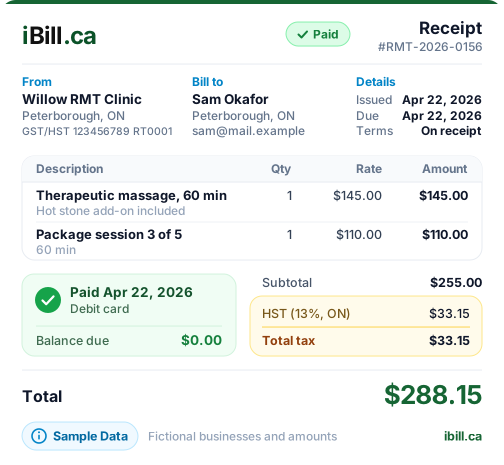
Every insurance-ready receipt must include your full legal name, RMT designation, registration number with your provincial regulatory body (such as the CMTO in Ontario or the CMTBC in British Columbia), clinic address, the client's full name, date of treatment, type of treatment provided, session duration, amount charged, and confirmation that payment was received. Missing any of these fields can result in a denied claim, which reflects poorly on your practice. Pricing for massage therapy sessions across Canada typically ranges from $90 to $140 for a 60-minute treatment, with rates varying by region and specialization. Deep tissue, sports massage, and prenatal massage often command premium rates. Your billing structure should reflect these differentiations clearly. Like personal trainers, massage therapists benefit from consistent session pricing that clients can easily understand and budget for.
Package Pricing and Cancellation Fee Policies
Session packages are a proven revenue strategy for RMTs. A typical package might offer 5 sessions at a 10 percent discount or 10 sessions at 15 percent off the regular rate. When selling packages, issue one invoice for the full package purchase, then issue individual treatment receipts as each session is used. This allows clients to submit each session separately to their insurance provider, maximizing their annual coverage. Cancellation fees are another billing consideration unique to appointment-based health practices. Most Canadian RMTs charge 50 to 100 percent of the session fee for no-shows or cancellations within 24 hours. Your cancellation policy should be documented in your intake forms and clearly noted on any cancellation fee invoices. Using client management tools helps you track appointment history and identify patterns of missed sessions.
Mobile Massage and GST/HST Considerations
Mobile massage therapists who travel to clients' homes or offices face additional billing considerations. Travel fees, typically $20 to $50 per visit, should appear as a separate line item so the treatment fee remains clear for insurance purposes. Some RMTs include travel within a certain radius and only charge beyond it. Regarding taxes, a travel fee is taxed the same way as the treatment: if you are registered for GST/HST, both carry it. Exempt health services are limited to the professions listed in the Excise Tax Act, such as physicians, dental practices and physiotherapists; massage therapy is not one of them.