
Balance Sheet Software — Assets, Liabilities & Equity
Your balance sheet generates automatically from your general ledger entries. Track assets, liabilities, and owner's equity in real time.
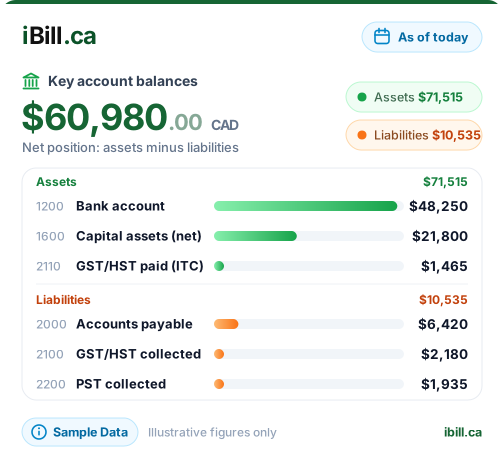
What is a Balance Sheet?
A balance sheet is a snapshot of your business's financial position at a specific point in time: Assets = Liabilities + Equity
Assets
Assets are everything your business owns or is owed. This includes cash in the bank (GL 1200), accounts receivable (GL 1100), capital assets like equipment and vehicles (GL 1600), and accumulated depreciation (GL 1610). iBill tracks all asset accounts from 1000 to 1699 and reports them on your balance sheet automatically.
Liabilities
Liabilities are what your business owes to others. This includes accounts payable, GST/HST collected (GL 2110), PST payable (GL 2220), and unearned revenue from advance payments (GL 2400). iBill tracks all liability accounts from 2000 to 2499 and keeps your balance sheet current as payments and obligations change.
Equity
Equity represents the owner's residual interest in the business after all liabilities are subtracted from assets. It includes owner's capital contributions (GL 3100) and retained earnings. iBill calculates equity automatically so your balance sheet always balances.
Balance Sheet Features
Everything you need to generate, review, and export your balance sheet — all powered by your general ledger
Auto-Generated from GL
Your balance sheet is generated directly from your general ledger journal entries. Every payment, expense, asset acquisition, and depreciation entry flows into the correct GL accounts — no manual data entry or spreadsheets needed.
Real-Time Updates
Every time you record a payment, log an expense, or run CCA depreciation, your balance sheet updates instantly. You always see your current financial position without waiting for month-end closes or manual reconciliation.
Asset Breakdown (1000-1600)
See a full breakdown of your asset accounts: Cash and Bank (1200), Accounts Receivable (1100), Capital Assets (1600), and Accumulated Depreciation (1610). Each account shows its current balance with drill-down to individual journal entries.
Liability Tracking (2000-2400)
Track all your obligations: GST/HST Collected (2110), PST Payable (2220), QST Payable (2230), and Unearned Revenue (2400). Liabilities update automatically when you collect tax on invoices or receive advance payments from clients.
Equity Section
The equity section shows owner's capital (GL 3100) and retained earnings. Net income from your income statement flows into retained earnings automatically, giving you a complete picture of the owner's stake in the business.
Export to PDF & Excel
Export your balance sheet to a professional PDF for your accountant or banker, or to Excel for further analysis. Both formats include the full account-level breakdown of assets, liabilities, and equity with date range and totals.
Generate Your Balance Sheet Automatically
Every journal entry flows into your balance sheet in real time. No spreadsheets, no manual data entry.
Get Started NowBalance Sheet Example
A sample balance sheet showing how assets, liabilities, and equity are presented
Sample Business — Balance Sheet
As at February 18, 2026
Assets = Liabilities + Equity: $87,050 = $5,250 + $81,800. The balance sheet must always balance. iBill enforces this through double-entry accounting — every debit has an equal and opposite credit.
Balance Sheet FAQs
Ready to see your financial position in real time?
Create AccountGenerate Your Balance Sheet Automatically
Trusted by Canadian businesses using iBill's accounting tools.
Create AccountUnlimited Invoices • CRA Audit-Ready