
Why HVAC Professionals in Canada Need Dedicated Invoice Software
HVAC contractors in Canada operate in one of the most seasonally volatile trades in the country. Summer brings a surge of air conditioning installations and emergency repair calls during heat waves, while winter drives furnace replacements and heating maintenance contracts. This seasonal swing means your invoicing needs to handle everything from a $150 filter change and tune-up to a $15,000 commercial rooftop unit installation -- often in the same week. The billing structures for these jobs are completely different: maintenance visits are typically flat-rate, installations involve deposits and progress payments, and warranty service calls may have no billable amount at all but still need documentation for manufacturer claims.
Refrigerant handling adds a layer of regulatory and billing complexity unique to HVAC work. Under Environment and Climate Change Canada regulations, technicians must be certified to handle controlled refrigerants like R-410A, and the cost of refrigerant has risen dramatically in recent years. A typical residential recharge might use 2 to 5 pounds of R-410A at $40 to $80 per pound, plus recovery fees and environmental levies that vary by province. Your invoice needs to itemize refrigerant quantity, per-unit cost, and any applicable environmental charges separately from labour -- both for client transparency and because these costs are tracked differently for tax purposes. Trades like electrical contractors and plumbing professionals face similar material-plus-labour billing challenges, but refrigerant tracking is uniquely demanding.
Maintenance Contracts and Equipment Installation Billing
Seasonal maintenance contracts are the backbone of a stable HVAC business. A typical residential plan includes a spring AC check and fall furnace inspection, billed either as a lump annual fee or two separate service visits. Managing dozens or hundreds of these contracts requires recurring invoice capability so you are not manually creating the same invoice every six months. The real value of contract billing software is that it also tracks which clients are due for service, helping you fill your schedule during shoulder seasons when emergency calls slow down.
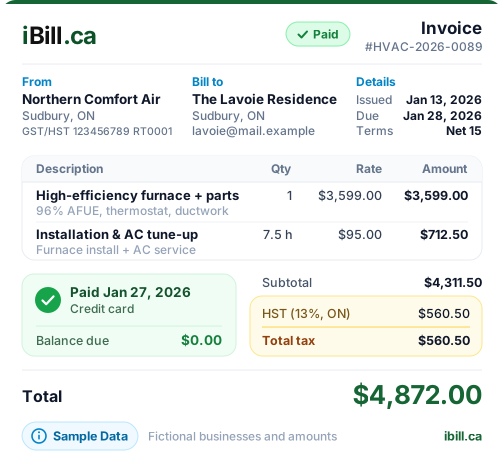
Equipment installation billing demands particular attention to detail. A furnace replacement involves the unit itself, ductwork modifications, gas line connections, thermostat wiring, permit fees, and old unit disposal. Each of these may carry different tax treatments -- in some provinces, environmental disposal fees are exempt from HST while labour and materials are not. Tracking these installation costs as business expenses through proper expense tracking is equally important for your own tax filings, since the wholesale cost of equipment is one of your largest deductible expenses. Getting both the client-facing invoice and your own expense records right means the difference between a clean CRA filing and a stressful audit.